
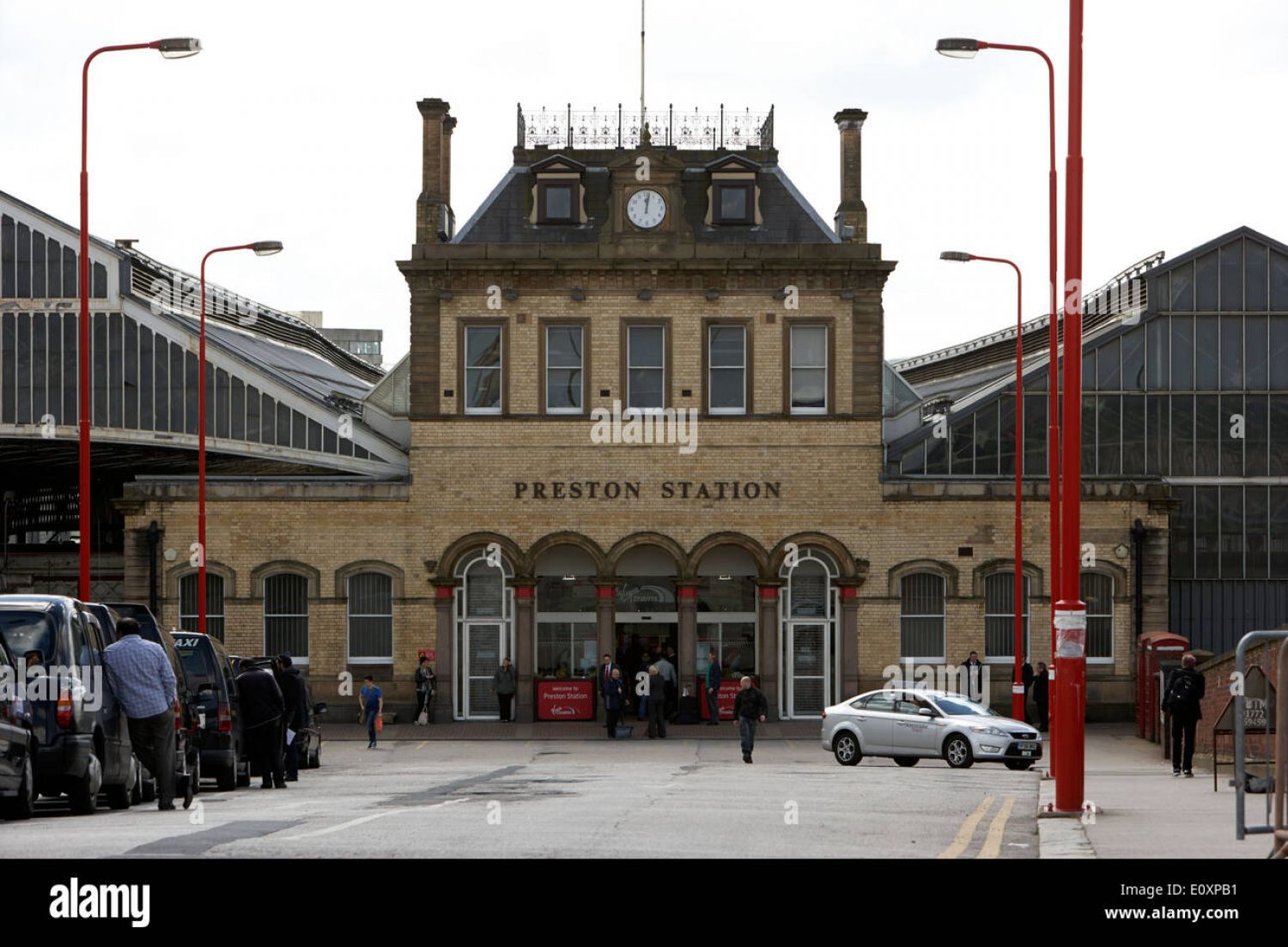
Buildings of Distinction - The Preston Railway Station
May, 14 2025
Preston railway station is more than just a way to commute to work or recreational uses. Steeped in fascinating history dating back a couple of centuries and remains the pivotal point for Prestonians to travel around.
Let us discover more in this 2 minute 43 second film – ‘Railway Heritage – Magnificent Preston Railway Station from 1880 – Virgin and Northern trains –
In its coaching days, Preston was an important centre for both passenger and postal traffic. This importance continued into the railway age, both as a major junction and as a stopping point about halfway between London and Glasgow.
At the time of it’s grand opening by the North Union Railway, the line north of the station passed through a tunnel under the west end of Fishergate (then Preston's major thoroughfare). It was on a slope so steep that sometimes station staff had to push trains out of the station.
By the mid- 19th century the station had generated a lot of business and was handling trains from Wigan and the South – Bolton, Fleetwood, Blackpool and the North and Blackburn. It was difficult for commuters back then because there were no footbridges so passengers had to cross the lines escorted by staff. North of the station was a network of goods lines around the end of the Lancaster Canal. The coal yards and sidings here continued to operate long after the canal had fallen into commercial disuse.
On 30th January 1877, a heavy storm blew the roof completely away from the station but a more serious accident occurred on 13 July 1896 when a London to Glasgow train passed through the station at an estimated 45 mph (70 km/h), despite a 10 mph (16 km/h) speed limit. It was derailed on a tight curve at the north end of the station, killing one person.
In response to this tragedy, the tracks were realigned. Charles Street, to the west of the station, was demolished, as were more houses northwest of the station. Fishergate bridge was extended on its west side. This allowed more tracks and platforms to be built on the west side of the station, with gentler curves. The Ribble bridge was widened again, from four to six tracks. These enlargements were completed by 1903. The east side of the station was also extended in 1913.
Not long after this extension war broke out, however, Preston kindly catered to servicemen as a free buffet was provided at the station during both World Wars. The Preston Station Free Buffet Association served free hot drinks, biscuits and buns and sold sandwiches at cost price to anyone in uniform 24 hours a day for the duration of the First World War.
One of the drama segments of the televised Preston Passion of 2012 was set in the First World War servicemen's buffet. The Second World War buffet was located in the southern building further down platforms 5&6 (now platforms 3&4).
Following the aftermath of the war, Preston was introduced to royalty after the visit of the late Queen Elizabeth 11 on 7th May 1974. A small plaque detailing her stay remains. This followed the completion of electrification of tracks north of the point where it stands. It was particularly significant as it marked the completion of the total electrification of the West Coast Main Line.
In popular culture rock band Jethro Tull once referenced Preston platform in the autobiographical song ‘Cheap Day Return’ from the 1971 album ‘Aqualung’. A quirky nod to a landmark station in Lancashire.
50 years later and Preston Railway Station is slightly modernised than it was a couple of centuries ago. These days you can even have an electronic ticket to travel making it so much easier for commuters. There is the café to relax before your train arrives and there is a shop selling reading material and snacks for your trip.
You can discover more about Preston station at the following website link –
https://www.nationalrail.co.uk/stations/preston-lancs/
It’s interesting architecture and longevity remains one of Preston’s oldest yet popular buildings. It has lived through two world wars, met royalty and even been referenced by an established rock band. Commuters can relax knowing their train will arrive promptly to and from their destination. Staff are always around to assist if you’re not sure what platform you should be on and its central location makes it easier to come and go for the people of Preston and beyond.
^Alex Ashworth CCG UK Blogger